
Published on: 16 September 2026
The time is nearly upon us to crook our necks, stare up into the night sky and enthusiastically exclaim 'Oooooooo' and 'Ahhhhhhh' as bright lights and colourful fireworks transform the November sky.
Since the 1600s, when Guy Fawkes was arrested while guarding explosives planted beneath the House of Lords, Bonfire Night has become a truly British tradition. Following the failed Gunpowder Plot, bonfires were lit across London in celebration that the attempt to assassinate King James I had been unsuccessful or perhaps (for some), in honour of Guy Fawkes' intention!
Either way, this tradition has continued to evolve across the UK, with firework displays, celebrations and bonfires marking this significant day.
Safety tips for organising your own fireworks display
Whether it's a large community event or a small gathering, when it comes to organising your own fireworks or Bonfire Night celebration, ensuring the safety of your spectators is paramount.
Following up-to-date guidance from the government, your local authority and any professional fireworks operators involved in the display can ensure that the event is carried out in the safest way possible. Without adhering to these regulations, the local authorities or landowner may not allow the event to take place and it could invalidate your insurance policy.
Here's a few safety points to consider when organising a community fireworks night.
Alert the local authorities and neighbouring properties
With larger events, notify local authorities such as the fire brigade, police and ambulance services. It's a busy time of year but if you give them enough notice prior to your event, they should be able to assist and help the best they can.
If your display is taking place near homes, farms or other properties, it’s a good idea to let neighbours know when and where the fireworks will be set off. Giving people advance notice means they can prepare for the noise, keep pets indoors and, where possible, move livestock to a safer location.
Advertising the event clearly can also help reduce the risk of complaints and give those living nearby enough time to make suitable arrangements before the display begins.
Manage crowds safely
Employ the services of a group of stewards to be responsible for crowd control. From start to finish, the stewards need to ensure each spectator is kept safe. It also gives the spectators a point of contact should a problem arise, so make sure they can be easily identified by wearing high-visibility clothing.
Be certain that your team know what to do in an emergency and have practised safety drills.
Plan for emergencies
In some cases, it may be suitable to have somebody responsible for first aid on the day of your event. For larger events, you could consider using an experienced first aid and event medical company to provide you first aid cover.
You should also make sure emergency services can access the site if needed and that all entrances and exits are clearly marked and kept free from obstructions. It can be helpful to nominate somebody who is responsible for contacting the emergency services if an incident occurs.
Choose a suitable location
A dazzling fireworks display need plenty of space! Your location should be large enough for the type of fireworks you’re using, the number of spectators attending and a suitable area for spent fireworks to fall safely. It’s a good idea to check the site in daylight too, keeping an eye out for overhead cables, nearby buildings and any other obstructions that could get in the way.
Don’t forget to consider the prevailing wind direction and what could happen if this changes during the event. Spectators should always be kept outside the recommended safety distance, with firing and fallout areas kept well away from the public. These distances can vary depending on the fireworks you’re using, so make sure you check the labels before the display begins.
Fireworks safety tips
Fireworks may be the stars of the show, but they need to be handled carefully. Taking a few simple precautions can help reduce the risk of accidents and make sure everyone can enjoy the display safely. Some important firework safety tips to remember include:
- Buy fireworks from a reputable retailer and check they have the appropriate safety marking.
- Store fireworks securely and always follow the instructions provided with each product.
- Only remove fireworks from storage when they are needed.
- Light fireworks one at a time and stand well clear once they have been lit.
- Never return to a firework after it has been lit.
- Always keep spectators outside the recommended safety distance.
- Keep smoking and naked flames away from stored fireworks.
- Do not allow spectators to bring their own fireworks to the event.
- Avoid drinking alcohol if you are responsible for handling or firing fireworks.
How to stay safe around a bonfire
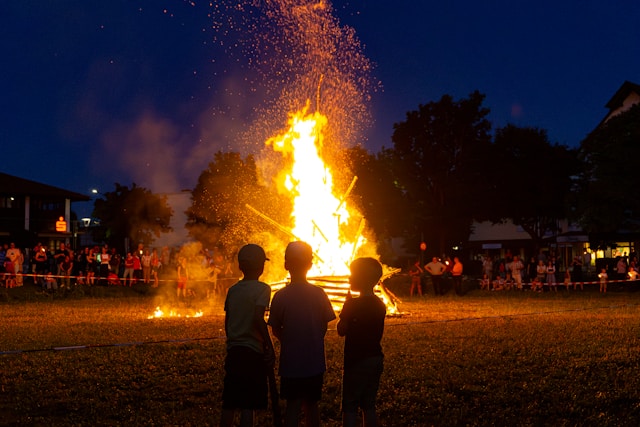
There’s nothing quite like gathering around a roaring bonfire on a chilly November evening, but it does come with a few extra risks to think about. A little preparation can go a long way towards keeping everybody safe:
- Keep the bonfire well away from buildings, fences, trees and overhead cables.
- Check the area for animals before the bonfire is lit.
- Spectators should be kept at a safe distance.
- One person should be responsible for managing the bonfire throughout the event and never leave it unattended.
- Never use petrol, paraffin or other flammable liquids to light or relight it.
- Keep suitable equipment for extinguishing the fire nearby in case it is needed.
- At the end of the event, make sure the bonfire is completely extinguished and cannot reignite once the site has been left.
When can you legally set off fireworks?
Before you get ready to light up the night sky, it’s important to check when and where fireworks can legally be used. There are restrictions in place, with different rules applying on occasions such as Bonfire Night, New Year’s Eve, Diwali and Chinese New Year. The rules can also vary across the UK, so it’s important to check the latest government guidance before your event to make sure your display is taking place legally.
How to dispose of fireworks safely
Once everybody has finished enjoying the fireworks, make sure any used fireworks and debris are dealt with safely. It can be helpful to nominate somebody or a small team to be responsible for checking and clearing the site once the display has finished.
Wait until used fireworks have completely cooled before collecting them, then soak them in water, place them in a bag and dispose of them in line with your local waste guidance. It’s also important to check the display area carefully for any unexploded fireworks or remaining debris before wrapping up for the night.
If your display is close to farmland, rivers or other waterways, pay particular attention to these areas during the clear-up to help reduce the risk of debris causing harm to animals or the local environment.
If you find that a firework has misfired or failed to go off, don’t approach it immediately or attempt to relight it. Follow the manufacturer’s instructions and, where necessary, contact the retailer, manufacturer or your local authority for advice on how to dispose of it safely.
Do you need insurance for a fireworks display?
Fireworks insurance is not always a legal requirement, but your venue, local authority or landowner might require you to have cover in place before the event can go ahead. Having the right insurance can also help protect you financially if somebody is injured, property is damaged or something unexpected affects your event.
Our fireworks insurance can cover both the organiser of the event and those releasing the fireworks (if the same person), automatically offering cover for a bonfire within the same policy. Public liability is our primary cover, but employers’ liability, event equipment and cancellation cover can also be included depending on the needs of your event. The cost of cover will depend on factors including the number of visitors attending, the level of public liability required and who will be releasing the fireworks.
Cancellation
In the case that the entire fireworks event has to be cancelled due to adverse weather conditions (deemed too unsafe by the local authorities to take place) and without the option for postponement, any irrecoverable costs up to the sum insured and in connection with the event would be covered.
For more information or if you have any questions, please don’t hesitate to contact us. Our friendly team members will be happy to help!